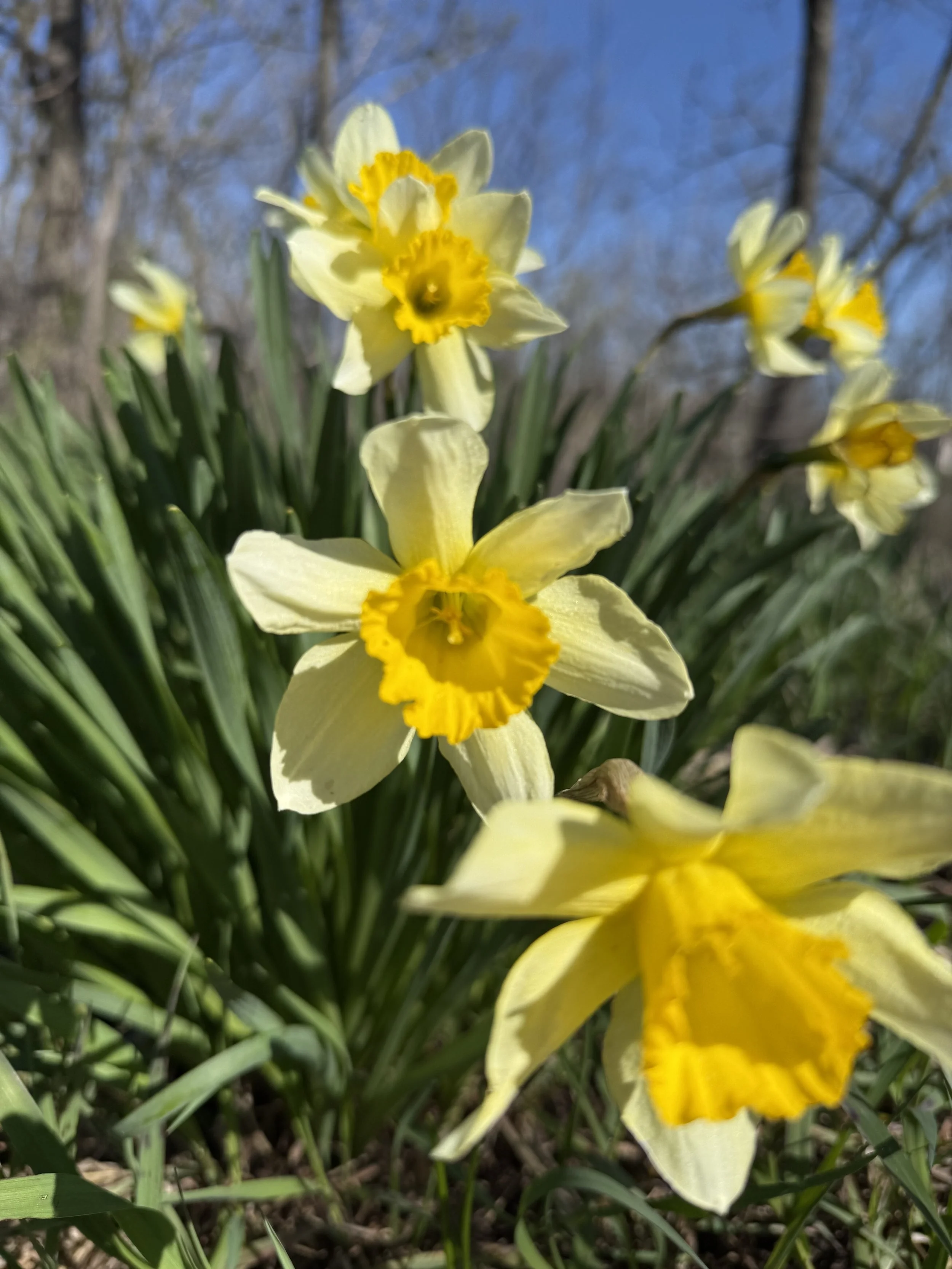
Daffodils blooming at Nancy’s House
At Nancy’s House, there are daffodils springing up in various unexpected places on the property - not even in a garden bed, but sporadically in the lawn. To my knowledge, these bulbs weren’t planted by us or our residents in recent years. Yet, year after year, they pop up in April, their cheery yellow blooms reminding us that another dark winter is over and that light and warmth are becoming a more regular part of our days. As someone who has been trying to develop a more proficient green thumb over the years, I still hold an affinity for plants like daffodils: resilient plants that overcome fickle spring weather ranging from feet of snow to torrential downpours — with sunshine sprinkled in between.
Here at Restorations, we’ve had ongoing conversations about resiliency, mostly stemming from our work with the Empowered Caregivers Project and the series of consultations we conducted with those with lived experience of trafficking and exploitation. We’ve reflected on resiliency being an incredible strength many survivors develop to overcome trauma, and also the inherent injustice that resiliency represents.
“To be resilient, you have to inherently experience injustice. There’s celebration with resilience, but there’s an element of grief that is often covered over. It’s a loaded word that people often use as a positive statement.”
Survivor, Survivor Forum — quoted in The Empowered Caregivers Toolkit“‘Oh, it made you who you are and made you strong!’ Personally, I didn’t need to be strong. I needed to be loved and safe.”
KR — quoted in The Empowered Caregivers Toolkit
If you’ve gone through the Empowered Caregivers Toolkit, you’ll see that we don’t shy away from continuing to use the word resiliency. But we do so with the recognition of its complexity.
Those daffodils that sprout up in unusual places on our property — there’s something beautiful in their ongoing resiliency, but there’s also something lonely about their placement. They’re in places that don’t receive a lot of care or attention. They aren’t surrounded by other plants. But year after year, they continue to grow.
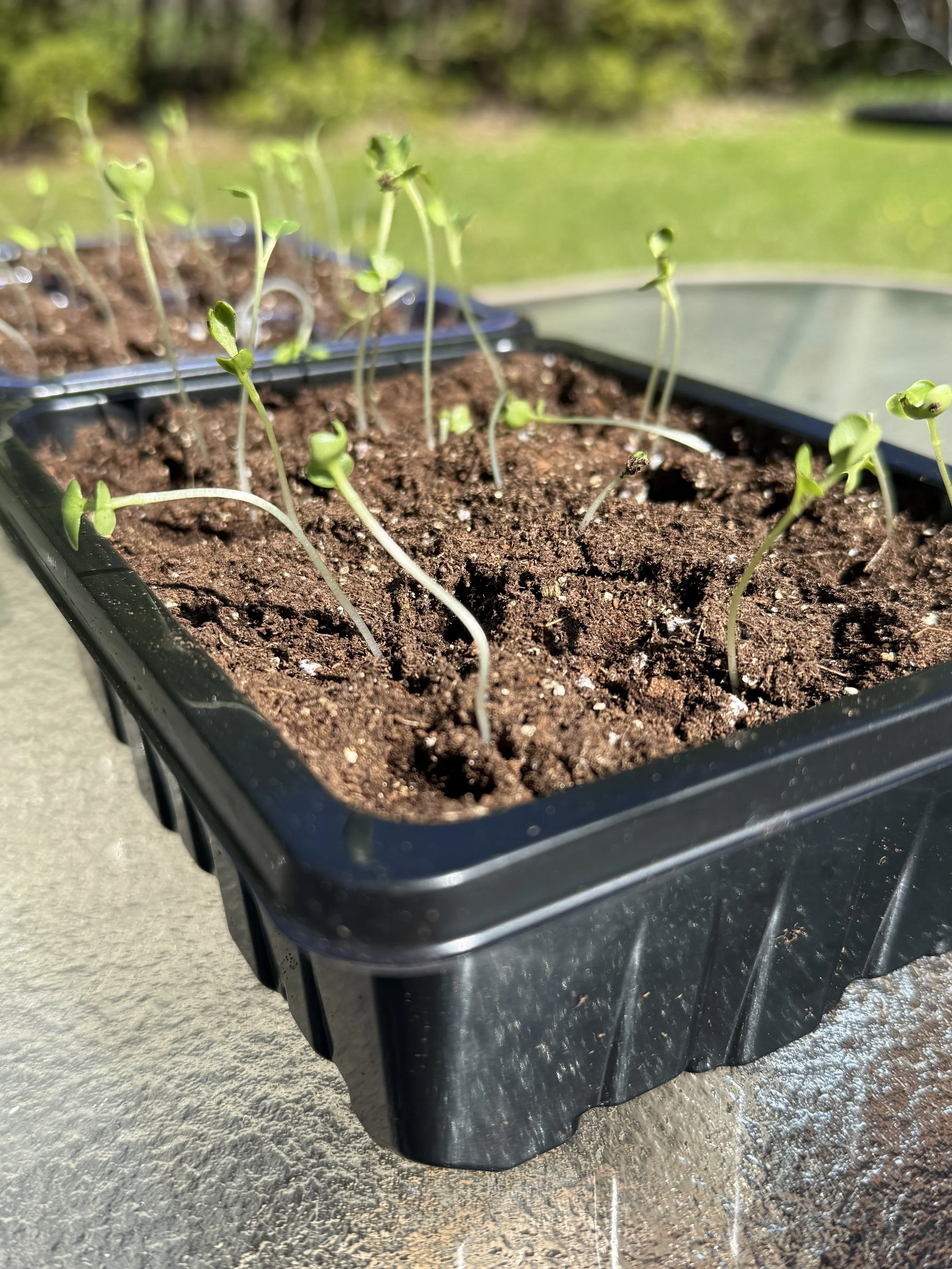
Seedlings grown by a survivor living at Nancy’s House
And then I think about the seedlings that a survivor living at Nancy’s House is currently growing. Heirloom tomatoes, cherry tomatoes, kale, and lettuce. She started them from seed inside, ensuring they had enough nutrients, water, and light to start sprouting. As they grow taller, she places them outside periodically, for sunshine and light, when the weather is just right! She provides an environment for them to grow and strengthen. And when they are ready, she will plant them outside with the hopes that they will continue thriving.
At Nancy’s House, we are here to recognize the resiliency of survivors and to provide a place to nurture development — all with the hopes of seeing survivors thrive in their community, leaning both on their inherent resiliency and the strength they build during their time with us.